
The genetics research community convened in April 2022 to discuss current developments in the field under the motto "Genetics of Inflammation and Infection . " This year's conference—organized by Professor Reinhard Köster of TU Braunschweig—took place online and aimed to elucidate fundamental genetic mechanisms of inflammatory and infectious processes.
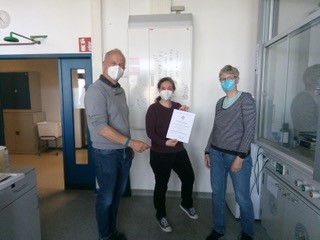
GfG President Prof. Gerhard Braus and Vice President Prof. Stefanie Pöggeler present the prize for the best junior lecture to Dr. Daniela Nordzieke (University of Göttingen).
The joint conference "Molecular Biology of Fungi 2022," organized by the VAAM (Association of Applied Fungi and Biotechnology) working group "Biology and Biotechnology of Fungi" and the Genetics Working Group of the German Society for Genetics "Genetics of Fungi," took place from September 7-9, 2022, at the Technical University of Kaiserslautern. The thematically diverse event also attracted numerous young scientists who had the opportunity to present and discuss their findings in extensive poster sessions. The German Society for Genetics awarded prizes to the best posters in three categories: Multicellular Development, Sensing and Signaling, and Biotechnology.
All prize winners received 150 euros in prize money, which was donated by GenAG of the Society for Genetics “Genetics of Fungi”.
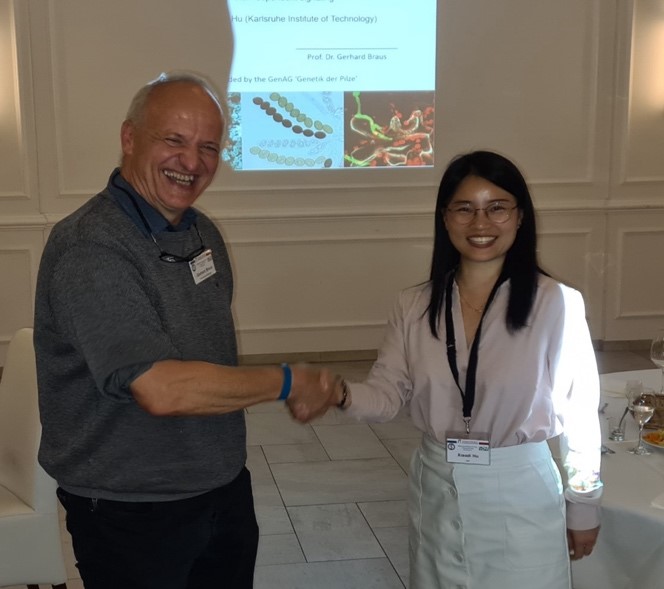
In the category “Sensing and Signaling”, the poster by Xiaodi Hu (Karlsruhe Institute of Technology), entitled “Interaction of Arthrobotrys flagrans with Caenorhabditis elegans involves G-protein dependent signaling”, was awarded.
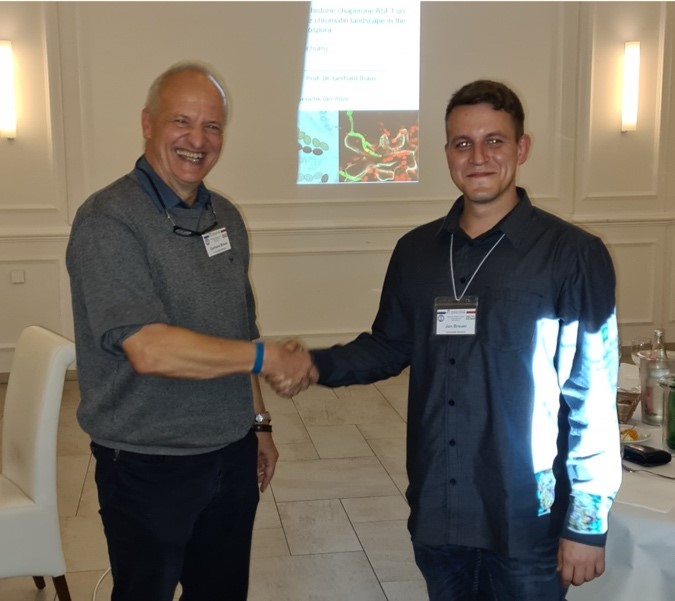
The prize in the category “Multicellular Development” went to Jan Breuer from the University of Bochum for his poster entitled “Analyzing the impact of the histone chaperone ASF1 on sexual development and the chromatin landscape in the ascomycete Sordaria macrospora” .
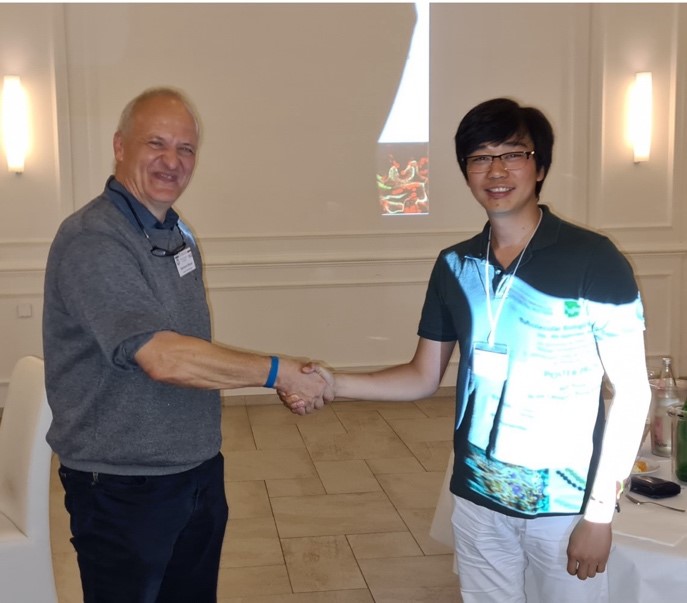
Yuxin Zhang from TU Munich was awarded a prize in the “Biotechnology” category for his poster “Characterize CLR-3 as a key factor in the cross-talk between cellulose and hemicellulose signaling in N. crassa”.